Pregnancy Centers and Maternal Health

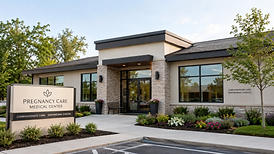
An Untapped Community Resource
Discussions about maternal health often focus on healthcare systems, hospitals, insurance coverage, provider shortages, and public health initiatives.
Those conversations are important.
But there is another question worth asking:
Are communities fully utilizing the resources they already have?
Across the country, pregnancy centers engage thousands of women each year during some of the earliest weeks of pregnancy. Many of these organizations have spent decades building trust, offering practical support, and connecting women to resources within their communities.
Yet pregnancy centers are often absent from broader maternal health conversations.
That may represent a missed opportunity.
A Community Asset Hiding in Plain Sight
For more than fifty years, pregnancy centers have served women facing pregnancy-related decisions.
What began primarily as a crisis-response movement has evolved significantly in many communities.
Today, pregnancy centers may offer services such as:
Pregnancy testing
Limited ultrasound services
Parenting education
Material assistance
Community referrals
Mentoring and support programs
Prenatal and parenting resources
Connections to healthcare providers
Not every center provides every service, and every community is different.
However, one reality remains consistent:
Pregnancy centers often meet women early.
In many cases, women seek support from a pregnancy center before they establish prenatal care with a healthcare provider.
That timing creates opportunities.
Reaching Women During a Critical Window
In a recent maternal health intelligence brief developed by Thrive Point Consulting, we found that nearly one-third of women in the studied community did not enter prenatal care until after the first trimester.
At the same time, conversations with pregnancy centers across multiple states suggest that many women first present to centers between five and eight weeks gestation.
This overlap is significant.
The first trimester is often when women are:
Confirming their pregnancy
Seeking information
Evaluating options
Looking for support
Determining next steps
It is also when barriers can begin to emerge.
Transportation concerns.
Insurance questions.
Financial challenges.
Uncertainty about available resources.
Lack of support.
Organizations that engage women during this period may have a unique opportunity to help connect them with the services and support systems they need.
Pregnancy Centers Are Not Hospitals
It is important to acknowledge what pregnancy centers are—and what they are not.
Pregnancy centers are not intended to replace physicians, hospitals, obstetric providers, or healthcare systems. Nor should they attempt to do so.
The goal is not replacement. The opportunity is connection.
Many pregnancy centers are uniquely positioned to help women navigate the path toward healthcare, community resources, and support services. They often serve as trusted entry points during a period when women are actively seeking information and assistance.
When that role is understood clearly, pregnancy centers can complement existing maternal health efforts rather than compete with them.
The Importance of Continuity
One of the greatest challenges in maternal health is not simply access to services.
It is continuity of support.
Women often encounter a fragmented system where healthcare providers, community organizations, social services, churches, and support programs operate independently of one another.
The result can be confusion, missed opportunities, and unmet needs.
Pregnancy centers frequently operate at the intersection of these systems.
They may help women:
Connect with prenatal care
Navigate insurance or Medicaid enrollment
Access parenting resources
Find transportation assistance
Connect with community programs
Build supportive relationships
While no single organization can address every challenge, pregnancy centers often help create pathways that improve continuity of care.
Community Partnerships Create Greater Impact
Improving maternal health requires collaboration.
Healthcare providers, public health agencies, hospitals, churches, nonprofits, social service organizations, and pregnancy centers all bring unique strengths.
The strongest communities are often those where organizations understand their role and work together toward shared goals.
Partnership does not require agreement on every issue. It requires a commitment to serving women effectively.
When organizations communicate, coordinate referrals, and understand one another's contributions, women benefit.
The focus shifts from organizational silos to community impact.
Looking Ahead
Maternal health challenges are complex.
There is no single program, policy, or organization capable of solving them alone.
But communities can make progress by recognizing and leveraging existing assets.
Pregnancy centers represent one of those assets.
They have trusted relationships.
They engage women early.
They understand local communities.
They connect people to resources.
They provide support during critical moments.
These strengths do not replace healthcare systems.
They complement them.
Conclusion
As communities continue searching for ways to improve maternal and infant outcomes, perhaps it is time to broaden the conversation.
Instead of asking only what new programs need to be created, we should also ask:
What resources already exist that could play a greater role?
Pregnancy centers may be one of the answers.
Not because they can solve every challenge.
But because they often meet women early, provide meaningful support, and help bridge the gap between pregnancy discovery and the broader maternal health system.
In a time when communities are searching for practical ways to improve outcomes for women and families, that contribution deserves thoughtful consideration.

Comments